
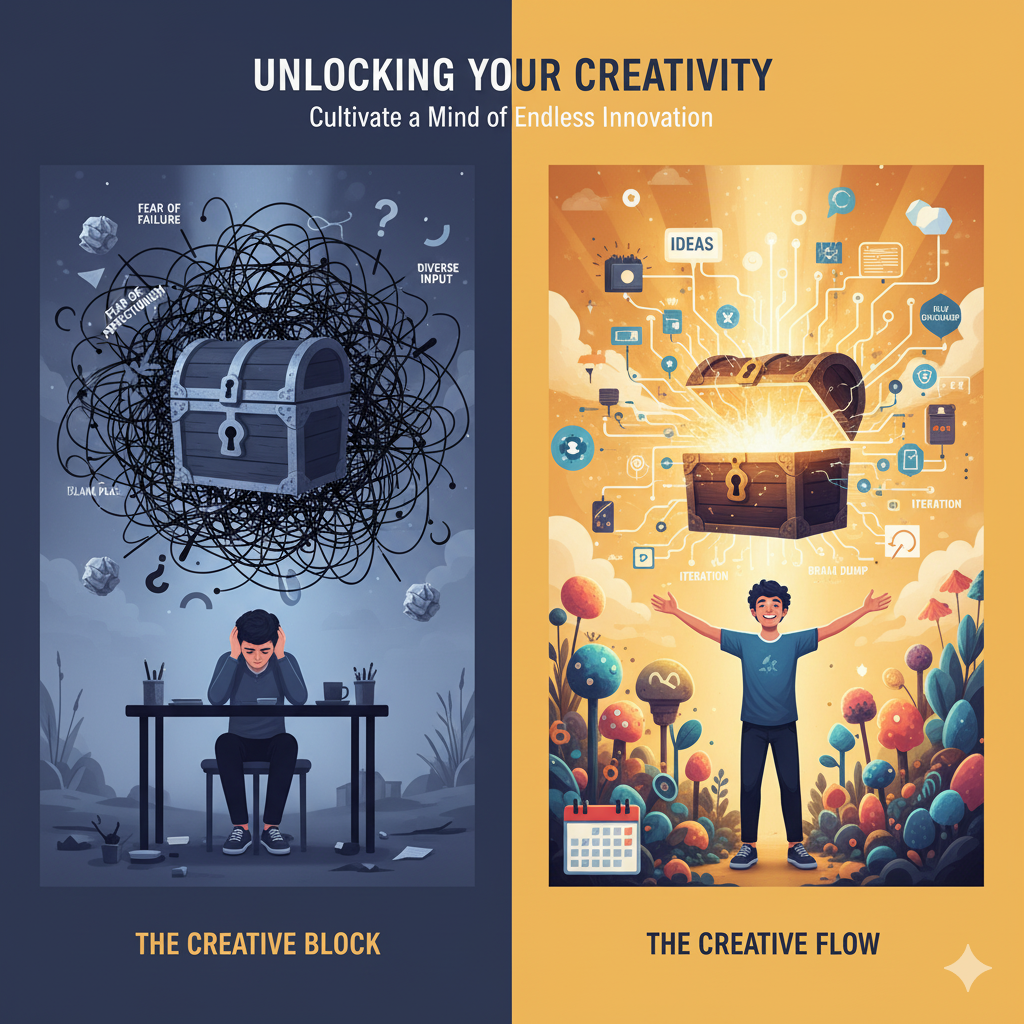
We tend to think of creativity as a unique gift, a flash of inspiration that only a select few may experience. In actuality, though, everyone has a creative nature. It’s a basic human ability to solve problems, envision new possibilities, and come up with fresh ideas; it’s not a skill only artists and musicians possess. If you feel that your creative well is now empty, it’s usually a lack of practice and deliberate organization rather than a lack of skill. It’s more important to show up and provide the right environment for fresh ideas to thrive than it is to wait for inspiration to strike.
Removing the crippling strain of perfection and adopting a beginner’s mindset is the first crucial step. Self-criticism kills play faster than anything else, because exploration and play are essential to creativity. Whether you’re writing a paragraph, learning a new chord, or coming up with a business solution, when you begin a new endeavor, you should make a commitment to producing intentionally clumsy, faulty, and even absurd ideas. Often referred to as a “brain dump,” the objective of this first stage is quantity rather than quality. Allowing yourself to produce genuinely poor work helps you get past the inner critic that rejects every concept before it has a chance to develop. Your mind is free to pursue new avenues when you give yourself freedom to fail.
You must consciously provide your brain with fresh and varied stimuli in order to maintain the flow of ideas. In essence, creativity is the ability to generate connections between previously unconnected ideas, and you cannot create new connections without fresh information. This entails modifying your customs and consuming patterns. Do you read books on your field all the time? Consider reading a history book or enjoying a musical genre that is unfamiliar to you. Are you indoors all the time? Take a stroll around an unfamiliar area of the city and pay attention to your surroundings. Your brain is forced to synthesis and integrate different pieces of knowledge into new solutions by these external stimuli, which serve as fuel.
In the end, being creative is more of a dependable skill developed via practice than an impromptu occurrence. It requires you to maintain the same level of regard for your creative time as you do for your work obligations. Make time in your calendar for “play,” and when you do sit down, focus on the process rather than the result. You should understand that irritation or “hitting a wall” is a sign that your brain is rearranging and getting ready for a breakthrough, not that you should stop. Creating an environment that encourages experimentation and actively searching out new information can help you consistently unleash your creative potential and infuse your life with unique ideas.