
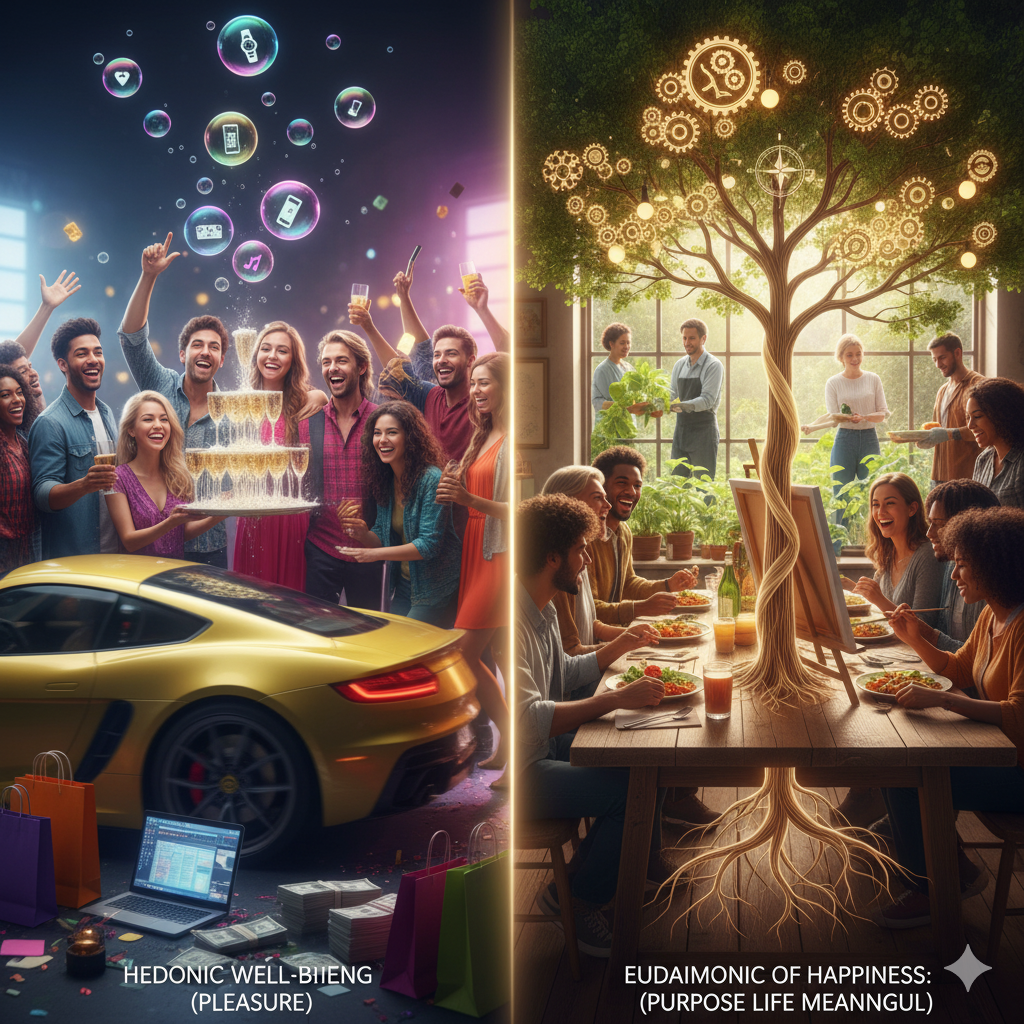
Each of us strives for happiness in our own unique manner. Although it’s the universal human aim, it frequently seems unattainable—like a horizon we can constantly see but never quite reach. We may make the mistake of thinking that pleasure may be found in a particular relationship status, the next big purchase, or the ideal work title. However, decades of research on the psychology of well-being point to something far more straightforward and profound: internal relationships and habits, rather than outward accomplishments, are the source of true happiness and a sense of purpose in life. Intentionality is more important than luck.
The Purpose and Pleasure Pillars
A fulfilling life is frequently divided by psychologists into two essential elements that contribute to general well-being.
1. Hedonic well-being, or the principle of pleasure
We typically associate this type of happiness with the pleasure of a delicious meal, the excitement of a Friday night, or the basic coziness of being warm. The goal is to minimize suffering and maximize enjoyment. Although pleasant, this type of bliss is frequently short-lived. The excitement of a new device is fleeting, and the thrill soon fades. Building a house on sand is similar to relying only on hedonic bliss; while it may feel nice at the time, it lacks a strong basis.
2. The Purpose Principle, or Eudaimonic Well-Being
This is the sense of fulfillment that is deeper and lasts longer. Eudaimonia, which translates to “living well” or “flourishing” in Greek, is associated with maintaining a morally upright life. It’s the fulfillment that comes from making a difference, working toward personal development, and feeling that your activities have an impact. This kind of bliss is strong. Its foundation in purpose keeps you going when things get hard.
Where You Can Actually Find Meaning
What does the evidence suggest if achieving material success doesn’t provide long-lasting happiness?
Solid, Intimate Relationships
The quality of your connections is the best indicator of a long, happy life, not wealth or celebrity. Humans are social beings at their core. A safety net and a continual source of happiness can be created by devoting time and effort to developing strong, trustworthy relationships with friends, family, and community members. True meaning is frequently communicated.
The “Flow” State
The word “flow” was created by psychologist Mihaly Csikszentmihalyi to characterize the state of mind in which you are totally engrossed while working on a task that tests your abilities. You feel completely focused and time seems to stop.
Altruism and Contribution
Giving is typically the source of meaning. Research consistently demonstrates that investing in others or giving your time yields a greater and more enduring increase in pleasure than investing in oneself. Your sense of worth and position in the world is strengthened when you believe you are making a positive impact on the lives of others. It causes you to turn your attention from self-criticism to constructive influence.
True happiness is a daily practice of developing a purpose, connecting profoundly, and making investments in the relationships that shape our lives; it is not a destination. We transcend mere happiness to true fulfillment when we put connection and contribution ahead of consumption and transient pleasure.