
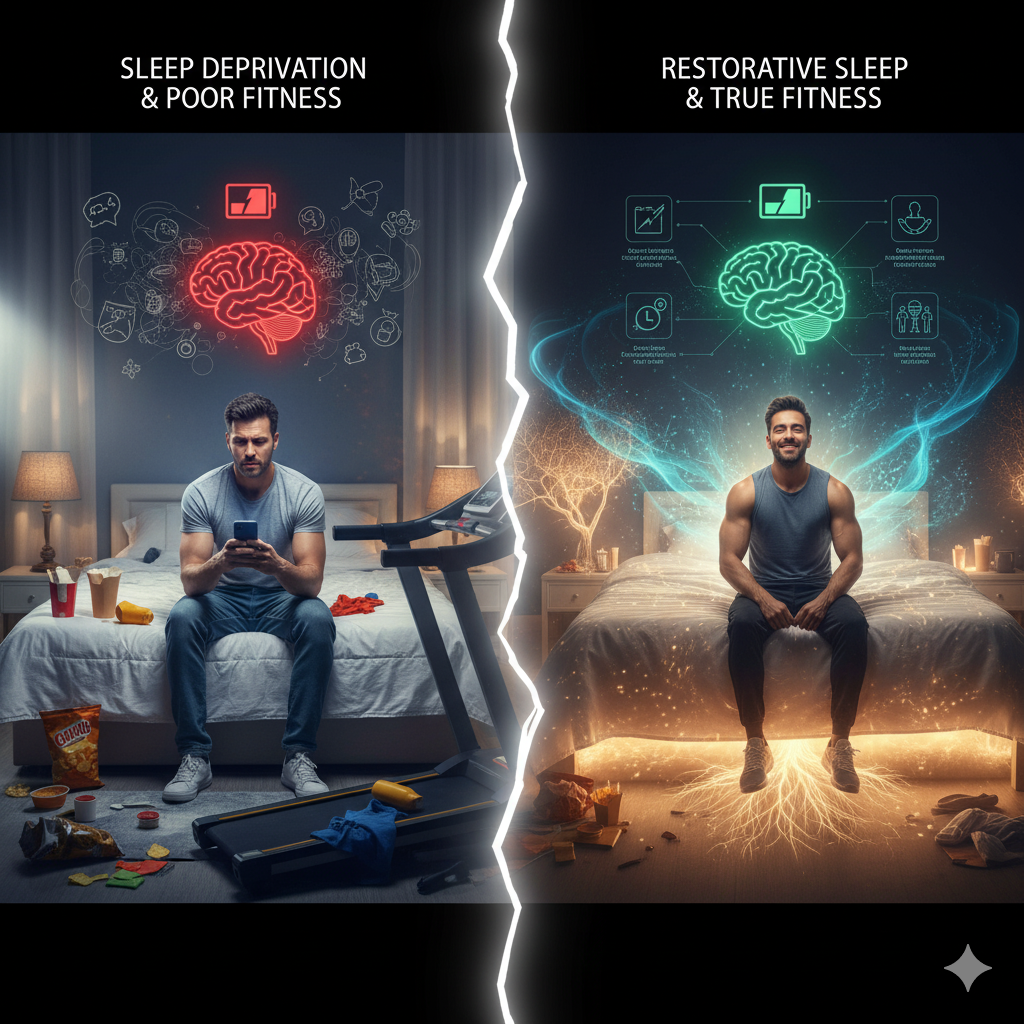
Fitness is frequently associated with demanding exercise regimens and rigorous dietary guidelines. We carefully track calories and chase distances. All of your hard work could be undone, though, if you’re missing one important element. Sleep is that element. It is not a luxury or a passive “off-mode”; sleep is the cornerstone of actual health, vitality, and mental toughness. Your body finds it difficult to heal itself, your hormones become unbalanced, and your mind is unable to perform at its best when you don’t get enough good sleep. You have to make a commitment to sleep well if you want to live a happier, healthier life.
The Restoration Science
What precisely happens during sleep that makes it so important for physical fitness? It’s a time for extensive physiological upkeep.
Muscle Growth and Repair: Your muscle fibers break down after a strenuous workout. Growth Hormone, which is necessary for muscle growth, repair, and reconstruction, is released by your body during the deep sleep stages (Non-REM). Sleep deprivation deprives your muscles of the time they require to grow stronger.
Hormonal Balance: Sleep has a big impact on how you control your stress and hunger. Sleep deprivation knocks two important hormones out of balance: leptin, which signals when you’re full, and ghrelin, which signals when you’re hungry. Fatigue causes ghrelin to rise and leptin to fall, which results in a constant hunger pang and a desire for sweet, high-carb foods. Weight management is practically impossible as a result.
Cognitive Recharge: Imagine that sleep is like clearing up the hard disk on your computer. This period of time is used by your brain to process feelings, form memories, and eliminate waste products from metabolism. Improved mood, more emotional resilience throughout the day, and improved focus are all strongly correlated with getting enough sleep.
Creating a Sleep Fortress
How do we make sure we receive enough good sleep since sleep is so vital? It all boils down to creating dependable routines and safeguarding your sleeping space.
Keep a Schedule: Your body benefits greatly from regularity, even on the weekends. Even on Saturdays and Sundays, make an effort to go to bed and wake up at roughly the same time each day. Your circadian rhythm, or internal clock, is regulated by this, which facilitates natural sleep.
Make a Digital Sunset: Melatonin, the hormone that tells your body it’s time to go to sleep, is suppressed by the blue light emitted by phones, tablets, and televisions. Make a commitment to shutting off all screens at least an hour before going to bed.
Make Your Den the Best It Can Be: Make sure your bedroom is a haven for intimacy and rest. It should be chilly, dark, and silent. Deep sleep is best achieved in a slightly cold room.Whether you want to run a marathon, gain strength, or just have more energy, sleep is the first step in achieving your health goals. It is the unchangeable cornerstone that determines how well all other healthy decisions you make work out.