
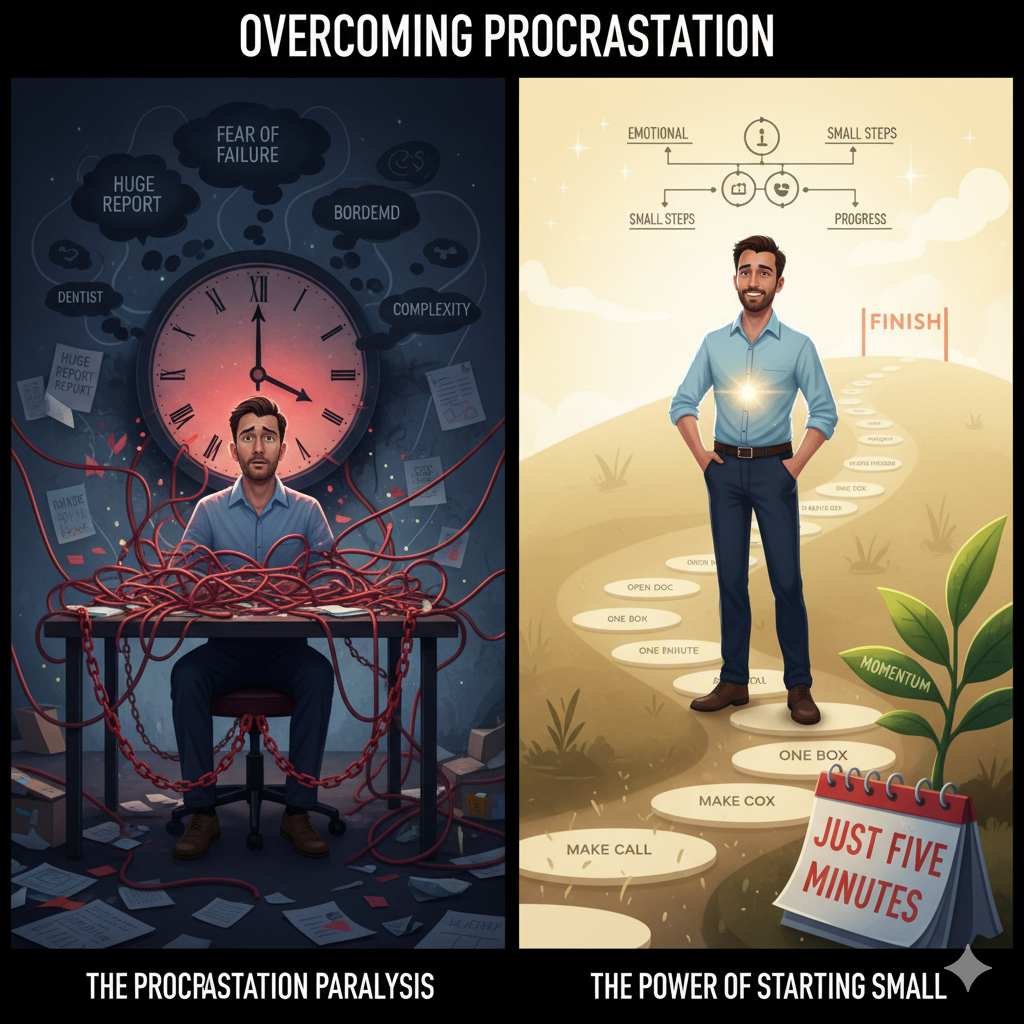
Do you have an impending duty that you keep putting off until the last minute, such as a major report, a difficult house repair, or even just phoning the dentist? Everybody has experienced the agonizing cycle of procrastination, in which putting off a task results in more stress than the activity itself. It’s simple to call ourselves “lazy,” but in reality, procrastination is typically a result of emotional control issues rather than poor time management. Because the activity evokes negative emotions, such as boredom, concern over imperfections, fear of failure, or dread of complexity, we put off starting. Simply said, procrastination is a coping strategy used by our brain to temporarily shield us from unpleasant emotions. The good news is, the shift from endless delay to consistent progress begins not with a new planner, but with a fundamental change in mindset.
The fundamental change is learning to value the basic act of beginning, despite any resistance. The emotional barrier must be broken by making the “initial step” absurdly modest. “Just Five Minutes” is the rule in question. A task is too difficult to begin when it seems overwhelming. Cut it sharply. You should promise yourself that you will be free to cease working on the activity after the allotted five minutes have passed. Usually, the task becomes less emotionally threatening and you want to keep going as you get past the initial inertia and build momentum. Since motivation is frequently derived from the momentum you generate, the objective is merely to begin rather than to finish.
Concentrating only on the next tiny step is another effective strategy for getting past inertia. Take your eyes off the whole mountain you must climb. Just concentrate on the one thing that needs to be done right now. If you have to create a report, focus just on opening the document and not on the conclusion. If you have to clean the garage, focus on moving one box rather than rearranging everything. Reducing the scope eliminates the overwhelm that sets off the procrastination defense mechanism. This exercise teaches your brain to link the activity with small, manageable accomplishments rather than with enormous effort.
Finding a magical productivity app isn’t the end goal when trying to move past putting off work. Finding the emotional causes of your delay and rewiring your brain to prioritize action are the goals. Treat yourself with kindness, divide the task into its smallest, most achievable initial step, and only commit to beginning. Clarity and momentum will come next, turning your anxiety into advancement.