
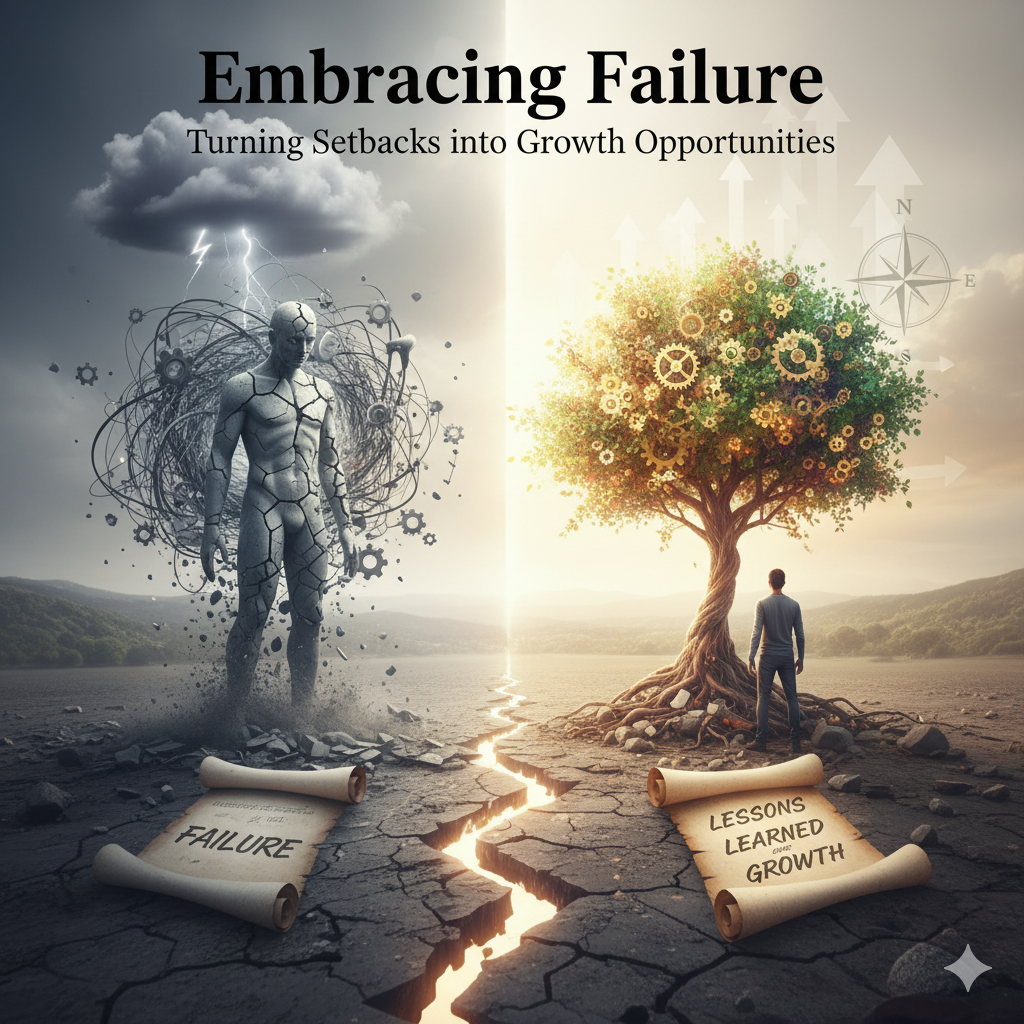
6.7“Embracing Failure: Turning Setbacks into Growth Opportunities”
Let’s face it, failure is painful. Everyone experiences the sting of disappointment when a project fails, a goal is overlooked, or a new business venture fails. Failure might seem like a final, conclusive judgment in a culture that sometimes only honors the highlights of achievement. What if, however, we have been viewing it incorrectly? What if the failures, blunders, and complete failures are not roadblocks but rather the path to success? Perhaps the most crucial mental adjustment you can make to achieve real growth and resilience is to learn to accept failure.
Consider failure as a compass needle wildly pointing in a better direction rather than as a solid wall. Simply said, each failure teaches you something new about what went wrong, what you undervalued, and where your blind spots are. A person who chooses to learn from their failures rather than internalizing them as evidence of their own weakness is what separates those who eventually succeed from those who quit up, not the fact that they never failed.
Changing the Story
Changing the narrative we tell ourselves about failure is essential to accepting it.
1. Disentangle Your Identity from the Result
It’s simple to declare, “I am a failure,” when something fails. This is the most harmful way of thinking. Rather, work on distancing yourself from the result. You are not a failure, even though the project failed, the attempt was poor, and the outcome was unanticipated. You are an individual who carried out an experiment and obtained useful information. This distance frees you from the weight of shame and enables you to evaluate the incident rationally.
2. Pose “What?” Rather than “Why?”
The natural reaction to a setback is to wonder, “Why did this happen to me?” This inquiry often sets off a chain reaction of victimization and blaming. “What did I learn from this?” or “What actions would I do differently next time?” are more fruitful questions. A moment of defeat may be quickly transformed into a strategic planning session by focusing on what moves your energy from thinking about the past to making plans for the future.
The Useful Steps in the Healing Process
Accepting failure isn’t merely a theoretical concept; it calls for a workable recovery strategy.
1.Perform a “Failure Audit” first.
Spend some time reviewing in peace and honesty. What particular elements had a role in the
setback? Was it a lack of resources, bad planning, bad timing, or a lack of skills? Without passing judgment, write it down. Decide which particular, useful lesson you will apply going forward. By using this methodical approach, the error is avoided from happening again.
2. Make a New, Smaller Start
The fear of failing again is the greatest worry following a setback. The best defense against this is to start over right away, but on a smaller scale. Try a tiny side endeavor if your large business launch didn’t work out. Set a very modest, manageable objective for the next two weeks if you were unable to reach your big weight loss target. Your sense of momentum is restored and the paralysis of fear is broken by this small, instant success.
An essential component of the ambitious, creative process is failure. No success story can teach you the mental toughness that comes from learning to view setbacks as valuable feedback.