
Have you ever experienced the 3 p.m. slump, when you lose focus and your only thoughts are of coffee or sugar rushes? Food is primarily used as fuel, yet we frequently treat it as a short-term solution to hunger or a rapid source of solace. The key to maintaining your energy, regulating your mood, and avoiding those annoying energy dips is knowing how the three main macronutrients—fats, proteins, and carbohydrates—interact with one another. Selecting the proper fuel for your body’s engine is more important than dieting.
The Three Sources of Power
Three macronutrients are necessary for every bodily activity, from thinking to sprinting. Your energy level is determined by how well they balance each other.
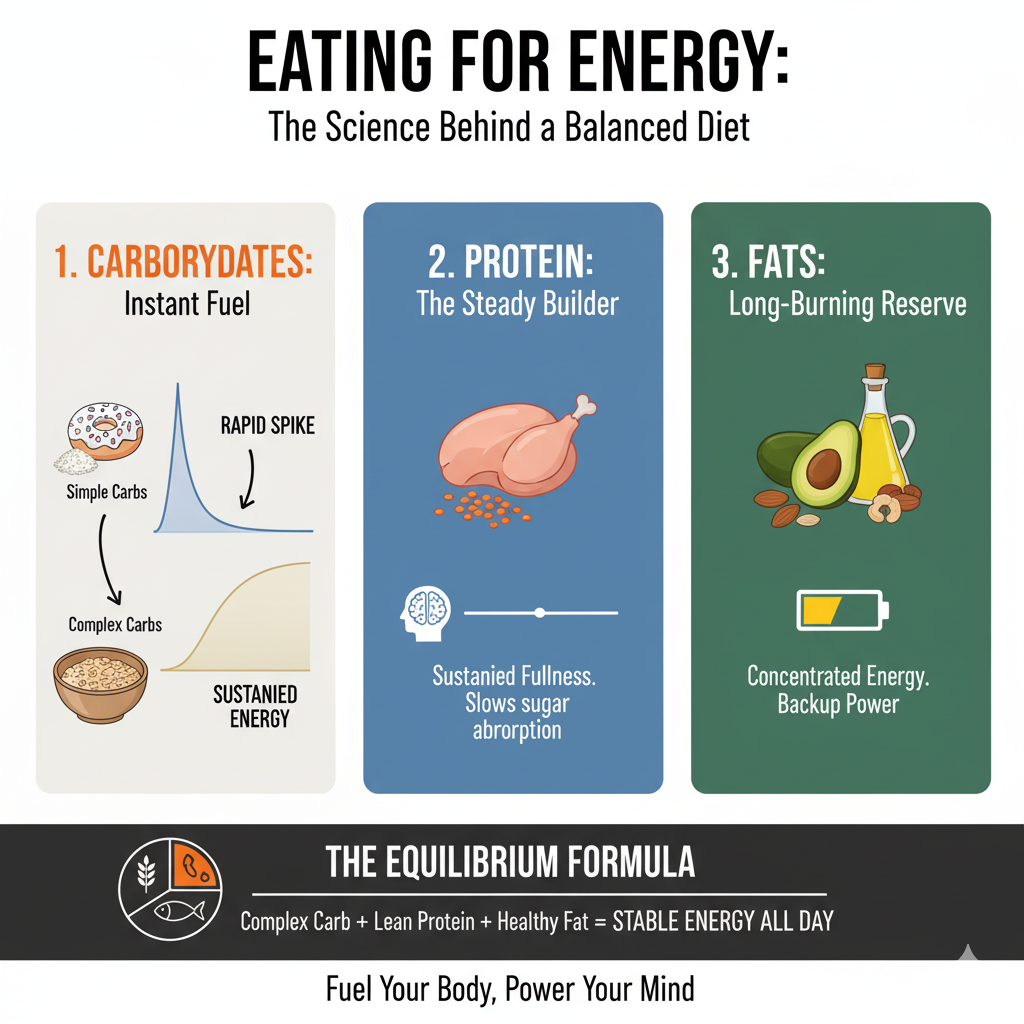
1. Carbohydrates: An Instant Energy Source
Despite their unfavorable reputation, carbohydrates remain your body’s main and most accessible energy source. They decompose into glucose, which your brain and muscles use directly as fuel.
The Difference Maker: Selecting the appropriate sort is crucial. White bread, sugary drinks, and candy are examples of simple carbohydrates that swiftly break down and provide you a sudden energy boost that is followed by a crash. The rollercoaster effect is this. Fiber, found in complex carbohydrates (such as vegetables, whole grains, and oats), slows down digestion.
Protein: The Consistent Builder
Your body’s repair crew is protein. Instead of giving you instant energy, it gives you the amino acids that make up hormones, enzymes, and muscle tissue.
Sustained Fullness: Protein considerably reduces the pace at which glucose is absorbed when consumed with carbohydrates. This is why oatmeal (carbohydrate) with a handful of almonds (protein) make for a much more satisfying and energizing breakfast than oatmeal alone. It ensures a steady flow of energy by acting as an essential traffic controller for your system.
3. The Long-Burning Reserve of Fats
Your body uses fat as its most concentrated energy source and backup batteries.
The Formula for Equilibrium Energy
The key to eating for energy is to deliberately match nutrients rather than avoiding any one of them. Every meal ought to contain:
A Complex Carb (such beans, quinoa, or sweet potatoes)
A Lean Protein (such as lentils, chicken, or fish)
An avocado, olive oil, or a few nuts are examples of healthy fats.
The slow digestion of the protein and fat stabilizes the rapid access to the carbohydrate that this combination guarantees. Check your balance the next time you’re preparing a plate. A balanced approach is the easiest method to change your energy levels every day, and it’s also healthier for your long-term health.