
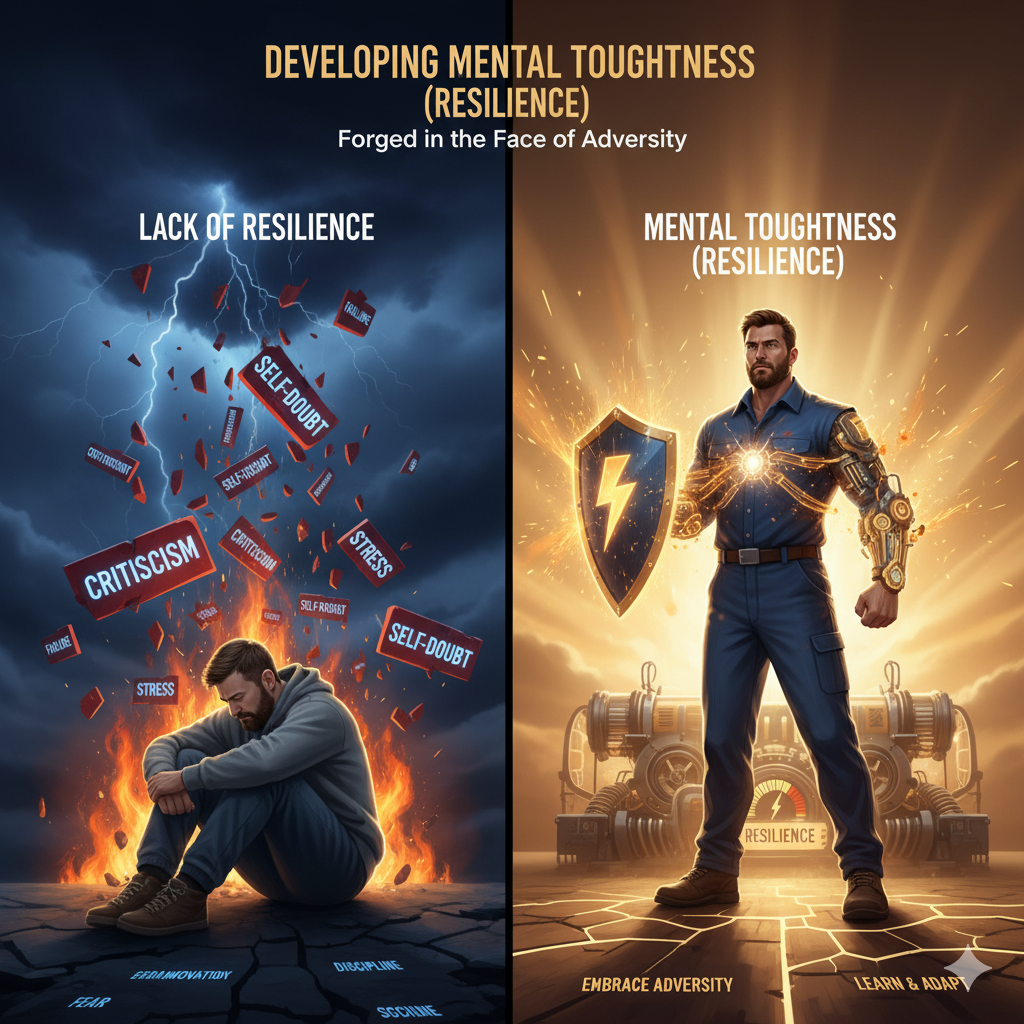
Have you ever noticed how certain people appear to be able to endure major setbacks and come out stronger than before? It’s toughness, or mental toughness—the quiet, inner force that helps you deal with stress, stay focused, and keep going when things don’t go your way—rather than luck. Our fast-paced workplace will undoubtedly provide challenges, and relying only on temporary inspiration won’t help you overcome them. Mental toughness, which is founded on the strong conviction that you possess the inner fortitude to overcome whatever obstacle life throws at you and that growth necessitates adversity, is the foundation of long-term success.
The foundation of developing resilience is consciously reevaluating failure. When a strategy fails or a goal is missed, for example, untrained brains often resort to self-criticism and humiliation. But the psychologically resilient person quickly alters the narrative. Instead of viewing the failure as a personal assessment (“I am a failure”), they view it as useful, objective information (“My method failed, and now I know what to alter”). This minor but significant distinction helps students to disentangle the outcome from themselves, allowing them to logically analyze the mistake and extract the precise lesson needed for the next attempt. Failure becomes a tool and a vital source of feedback rather than a last resort.
You must also learn to control your emotions if you want to develop this inner power. The natural reaction to adversity is frequently to freeze or panic. Recognizing that surge of negative emotion, whether it be fear, worry, or frustration, and not allowing it to control your behavior is the essence of mental toughness. You can create a little window between the stimulus and your response by using basic strategies like the “pause-and-breathe” strategy. You can pick a controlled response over an emotional one during this intentional silence. You demonstrate to your brain that your dedication to the task is greater than any fleeting bad emotion by showing up and carrying out the next required step even when you are totally demotivated.
When all is said and done, resilience is a skill developed via regular, minor exposure to hardship. You become mentally tough by seeking out challenges and persevering through them long enough to gain knowledge, not by avoiding difficult situations. You may create a spirit that can not only withstand any storm but is also empowered by the process of conquering it by continuously keeping your micro-commitments, accepting the lessons that can be learned from failures, and choosing disciplined action over emotional reaction.