
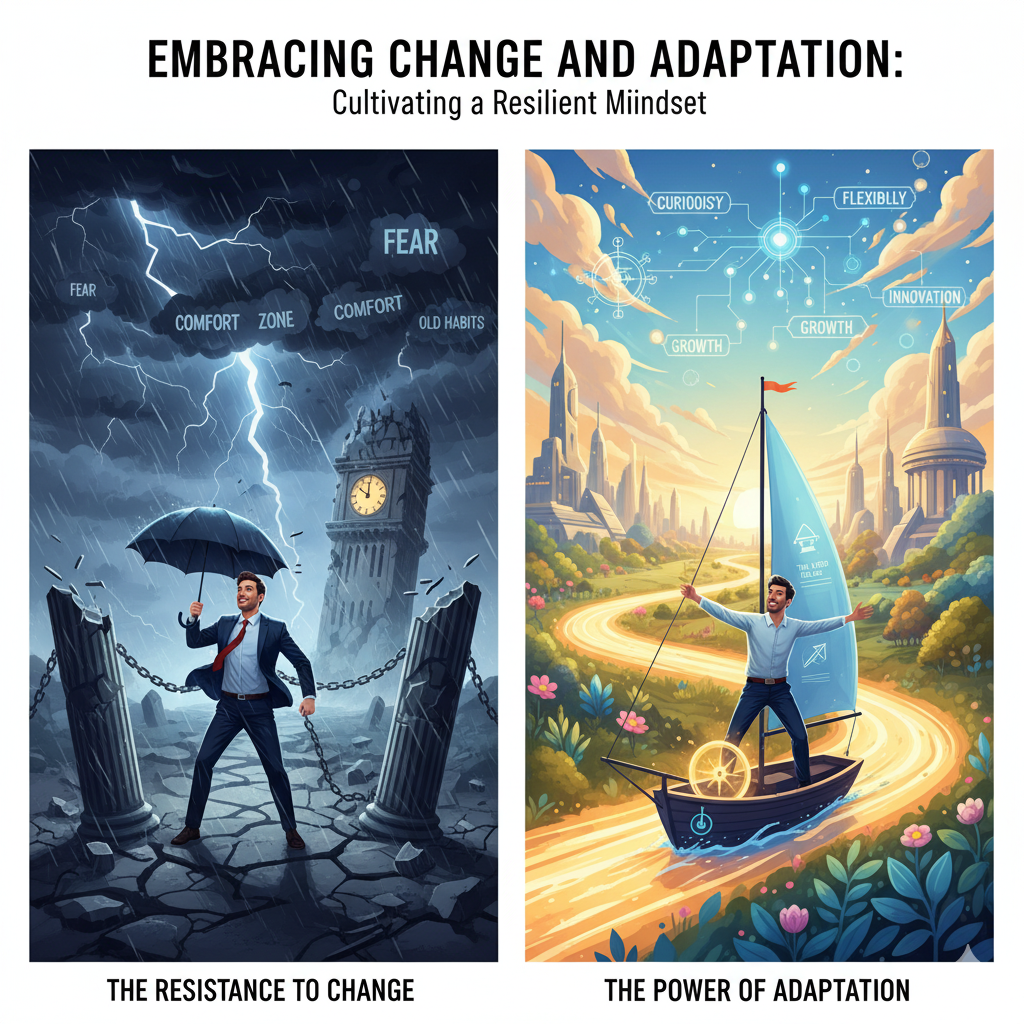
It is in our nature as humans to find solace in regularity and predictability. We create mental and physical frameworks that help us feel secure. However, life is a process of perpetual change by definition. Change is inevitable, whether it’s a worldwide technology revolution, a change in one’s employment, or a change in one’s relationship status. Many of us battle with our resistance to change rather than the change itself. Developing an active, resilient attitude that acknowledges that transformation is the most potent catalyst for development and long-term success is what it means to welcome change and adaptation rather than passively accepting it.
Moving over the initial emotional response—the fear, irritation, or longing for the past—and engaging in deliberate observation is the first step towards being an agent of change. Your nervous system signals for you to panic when something unexpected happens. “What fresh knowledge has this transition provided?” is a question your robust mind should be asking. Old habits that were preventing you from moving forward are frequently broken by change, putting you on a quicker, more effective path. Instead of focusing on what was lost, you can strategically prepare what can be constructed next by seeing the disruption as a teaching moment rather than a personal threat. The foundation of adaptation is this curiosity and receptivity to new information.
It takes a lot of trial and flexibility to develop the practical ability of adaptation. Change is thwarted by rigid thinking. Give yourself permission to approach fresh challenges with a “beginner’s mind” rather than trying to apply outdated solutions. This entails being open to experimenting with new tactics, even if they seem awkward or strange, and promptly dismissing them if they don’t work. Consider it a daily, tiny readiness to change your sails instead of fighting the wind, a continuous process of improving your navigation. The pressure to find the ideal solution on the first try is lessened by this iterative procedure, which is based on tiny, low-risk tests.
Your ability to adapt is ultimately what determines how resilient you are in life. It is those who have built a muscle for change, not those who are immune to it, who prosper. By developing curiosity, being adaptable, and seeing every setback as a chance to grow, you may turn the scary thought of change into a dependable source of inspiration and innovative potential. Instead of just getting by in life, you begin to live a life that is characterized by deliberate development.