
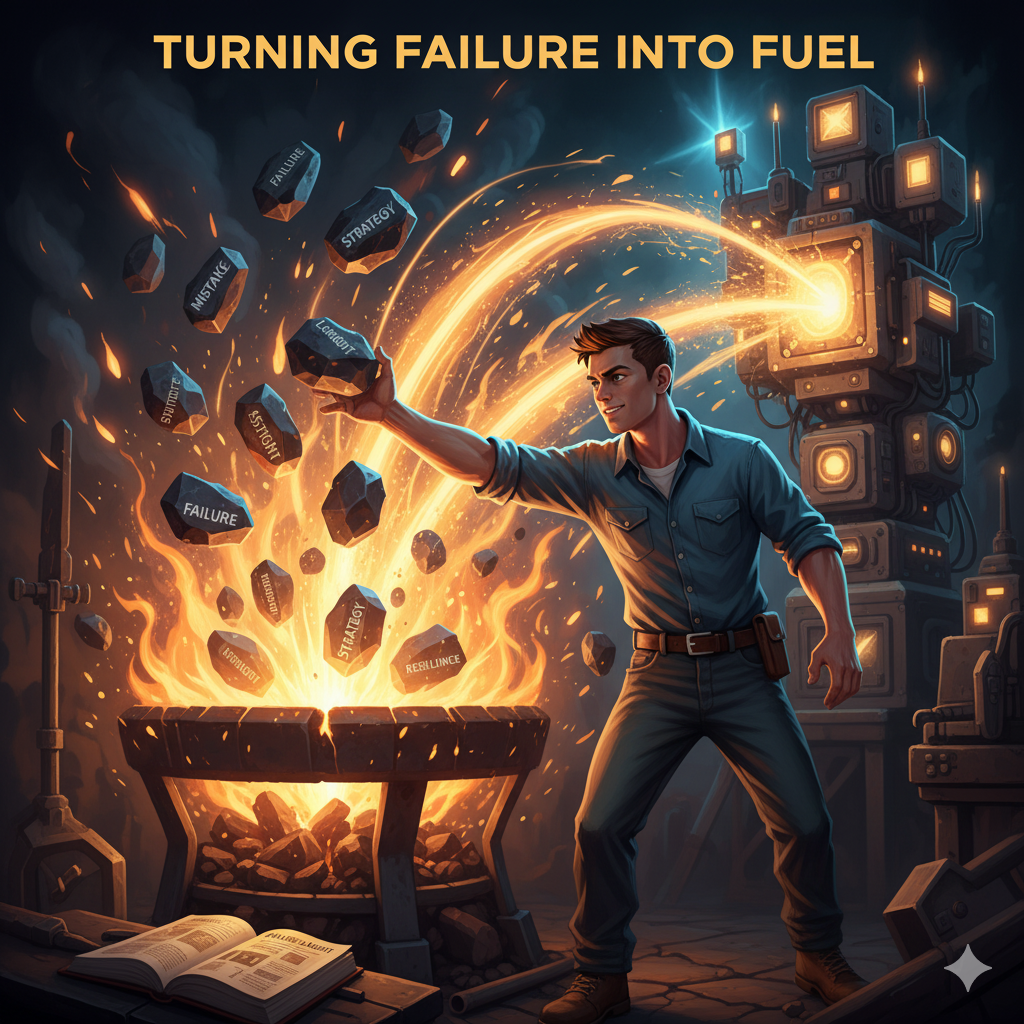
Everybody has that moment—the project that fails, the presentation that goes badly, the objective that we fail to achieve in spite of our best efforts. It’s normal to feel disappointed and to have the gut instinct that “I failed” when you live an ambitious life. However, that failing moment represents a turning point for many, a signal to give up or go back. The secret of top achievers is not that they never fail, but rather that they have a quiet, resolute talent: the capacity to use that hurt, that frustration, and that unanticipated result as the very motivation for their subsequent endeavor. A significant mental change is required to turn a setback from a decision into an important piece of navigational information.
The fundamental idea behind this transforming mentality is straightforward: acknowledge that your plan, not your identity, is what caused your failure. Saying “I am a failure” is simple when you miss a mark. “Which element of my process failed?” is a question that someone who is more resilient asks. You obtain the insight required for analysis by distancing yourself from the disappointing outcome and your intrinsic value. In this context, failure turns into a valuable feedback mechanism. It lets you know exactly what didn’t work, such as the talent gap being greater than you anticipated, the schedule being unreasonable, or the market not being ready. This knowledge is a gift that will help you improve your strategy for the following round and push your inventiveness in ways that success would never allow.
Adopt the instant “Failure Audit” to make this feasible. Rather than wallowing in guilt, spend a few minutes reflecting honestly and methodically. Which particular presumptions turned out to be incorrect? What one tiny action will you take differently the next time? You can interrupt the pattern of immobility by committing to a tiny, fresh action and instantly separating a tangible lesson. You just need to be disciplined enough to take that first small, well-informed step; you don’t need to be inspired to start over. The real, silent force that transforms short-term failure into long-term success is the capacity for rapid recovery—the ability to pick yourself up and put the knowledge to use right away.