
We’ve all been caught in the cycle: sitting on the couch, scrolling through perfectly curated feeds, and wishing we had the energy, the body, or the routine of the people we see. We know that prioritizing our health—through consistent movement, better nutrition, and mental space—is crucial, yet turning that wish into doing often feels like a giant, insurmountable leap. The gap between intention and action isn’t a failure of desire; it’s usually a failure of strategy. To move from passive aspiration to an unshakeable habit of wellness, we need to ditch the dramatic overhauls and focus on creating routines that are simple, automatic, and truly designed to stick.
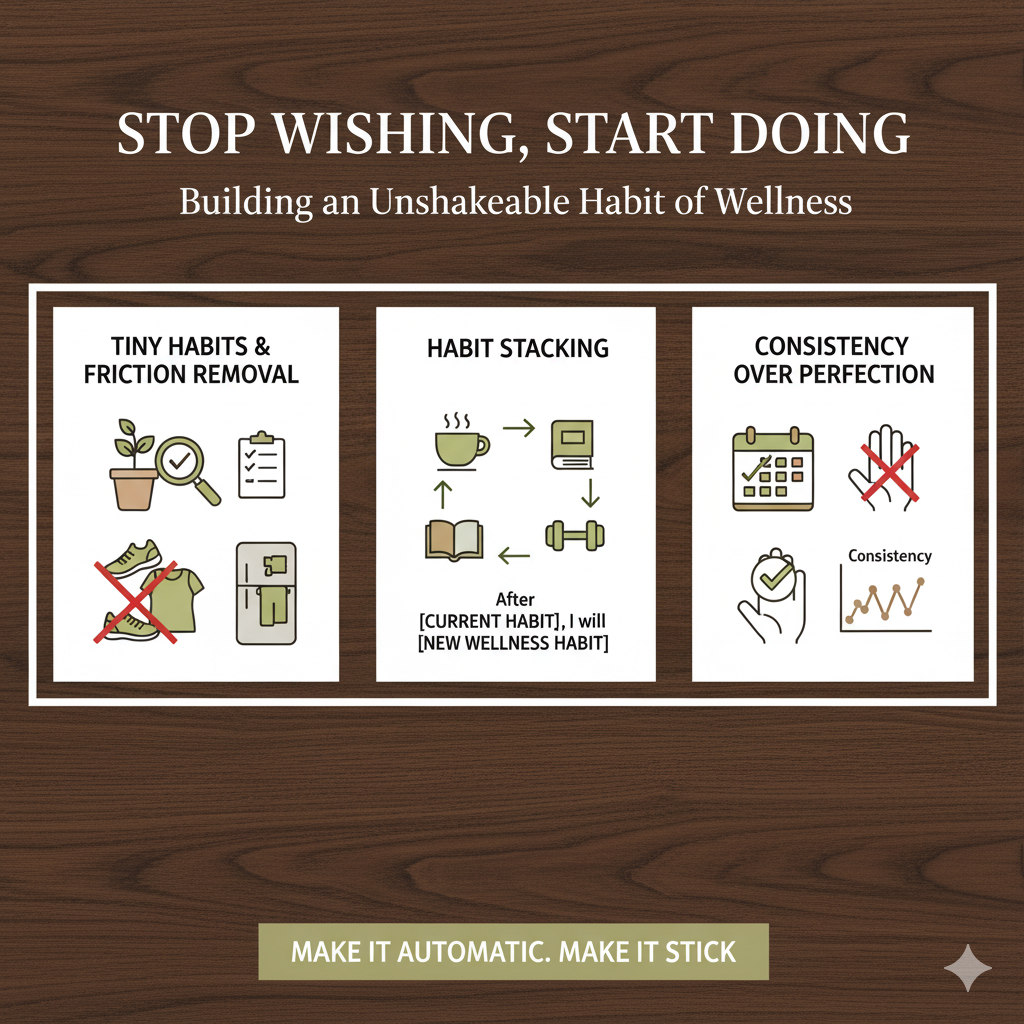
The biggest mistake people make when building wellness habits is aiming too high, too fast. This leads to burnout and the “all-or-nothing” trap. The secret lies in embracing the tiny habit. Instead of committing to a 45-minute workout, commit to doing just five push-ups or meditating for one minute. The action is so small it’s too easy to say no to. The goal isn’t immediate, massive results; it’s building momentum and reinforcing the identity of a healthy person. Hand-in-hand with this is friction removal. Want to eat better? Prep easy-to-grab veggies immediately. Want to exercise? Lay your workout clothes out the night before. By making the desired action ridiculously easy and the undesirable action slightly harder, you stack the deck in favor of consistency.
Attempting to incorporate a new habit into a hectic schedule is a surefire way to fail. You must use the power of habit stacking if you want to make wellness genuinely impregnable. Anchoring a new habit to an established routine is the goal of this tactic. The format is straightforward: “I shall [NEW WELLNESS HABIT] after [CURRENT HABIT].” For example: “I will drink a full glass of water when I pour my morning coffee.” Or, “I’ll perform ten deep breathing exercises after shutting down my laptop for the day.” This makes use of your current routine’s automaticity to create a potent trigger that eliminates the mental strain of choosing when to engage in the new, healthful behavior. The wellness routine becomes a natural part of your everyday routine.
The greatest threat to a wellness habit isn’t a bad day; it’s the guilt that follows. When you inevitably slip up, the Inner Critic tries to convince you that the whole system is broken. To build an unshakeable habit, you must embrace the mantra: “Never miss twice.” If you skip your walk Monday, make sure you get back on track Tuesday. This mindset prevents a single slip from turning into a full-blown surrender. Focus on consistency—the frequency with which you show up—rather than perfection—the quality of any single effort. By valuing the repeated act of showing up, setting the bar low, and connecting your tiny, powerful actions to your deepest wishes, you transform your passive desire for wellness into an active, automatic, and truly unshakeable way of life.