
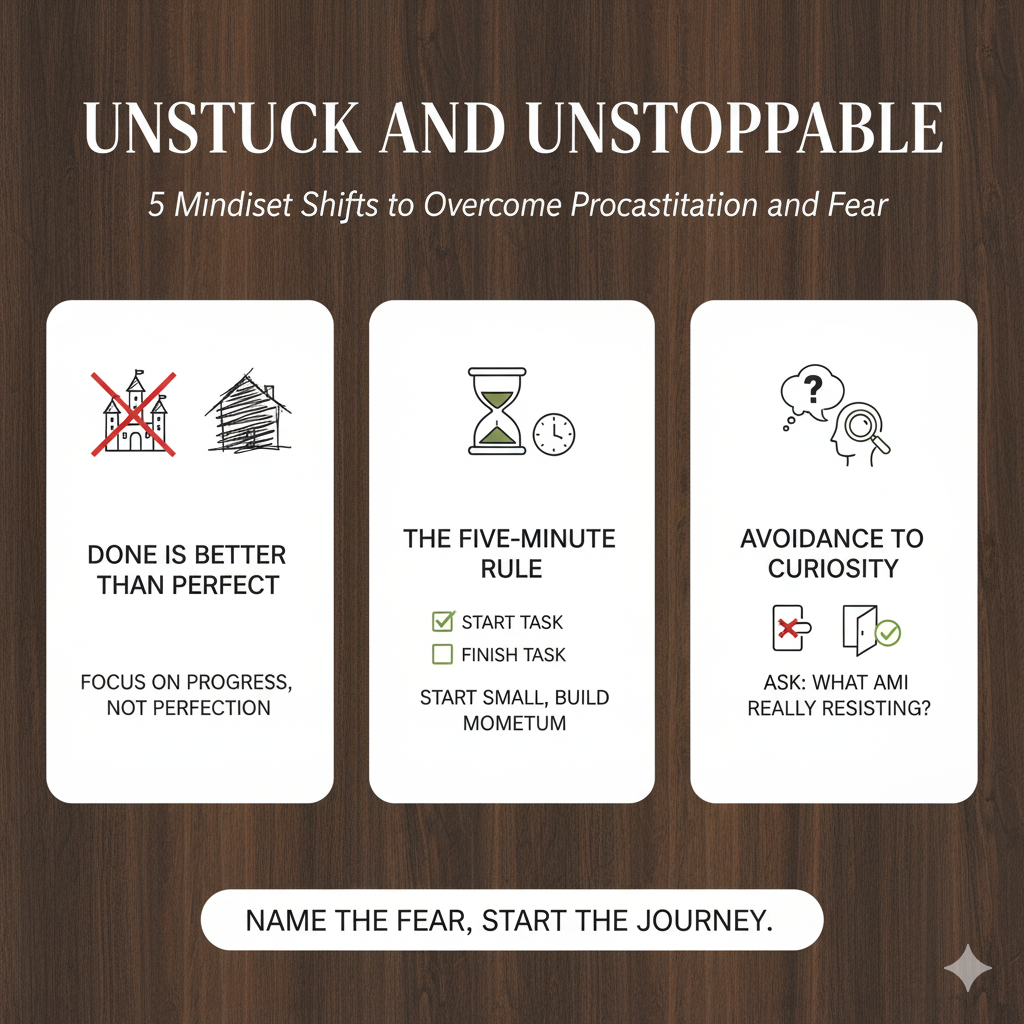
Everyone has thought that a significant assignment or goal is approaching, but in reality, we wind up cleaning the spice cabinet or viewing endless videos. Procrastination is typically a deeply ingrained emotional response—a coping strategy for handling fear—rather than an indication of laziness. We fear the pain of the endeavor itself, as well as failure and success. We need to drastically change our perspective on the task, our own abilities, and what constitutes an effective job in order to get unstuck. Determination alone won’t get us there. We might eventually become unstoppable if we alter our thought patterns and remove the mental obstacles that keep us from acting.
The excessive pressure of perfectionism is one of the main causes of procrastination. “I won’t start at all if I can’t do it perfectly,” we convince ourselves. This is a trap! Understanding that done is better than flawless is the first important mental adjustment. Strive for progress rather than a perfect conclusion. Redefining success as only taking the next little step eliminates the fear of failure. A “shitty first draft” or minimum viable product should be your main goal. The terror of the blank page disappears once you have something concrete, and the process of polishing that rough beginning becomes considerably less daunting.
Most of the time, big jobs seem like an insurmountable mountain. One of the main causes of delay is this sense of overwhelm. You can fight this by thinking that you only need to spend the first five minutes working on a task. This psychological gimmick reduces the perceived entry barrier. Remind yourself that you just have five minutes to open the file, compose a paragraph, or arrange one shelf. After you get beyond that initial friction, inertia usually takes control. You’ve started the engine, you’re already seated, and it feels easier to keep going than to stop. This change reduces a massive commitment to a little, doable self-agreement.
The emotion we attach to a task is often what we are delaying, not the activity itself. The fear of facing your financial reality may be the reason you put off creating a budget. The fear of conflict is the resistance if you choose not to send a challenging email. Here, shifting from avoidance to curiosity is the most important mentality change. Ask yourself, “What am I truly resisting right now?” if you feel the need to put things off. By identifying the underlying emotion, whether it be boredom, dread, or insecurity, you may deal with the core problem rather than simply the symptoms. The fear no longer has as much influence on your behavior once you give it a name.