
Everyone has experienced this: inspired by a fresh objective, we start a huge endeavor, only to burn out dramatically a week later. We confuse an all-or-nothing mentality—a quick surge of intensity—for real growth. But the key of anyone who has attained genuinely significant, long-lasting success isn’t a single Herculean effort; rather, it’s the silent, steady march of consistency. Consider this: a cruise liner that is traveling thousands of miles steadily requires small, continuous power (consistency), yet a rocket need a massive amount of fuel to get off the ground (intensity). It’s what separates a consistent, compounding force from a transient high.
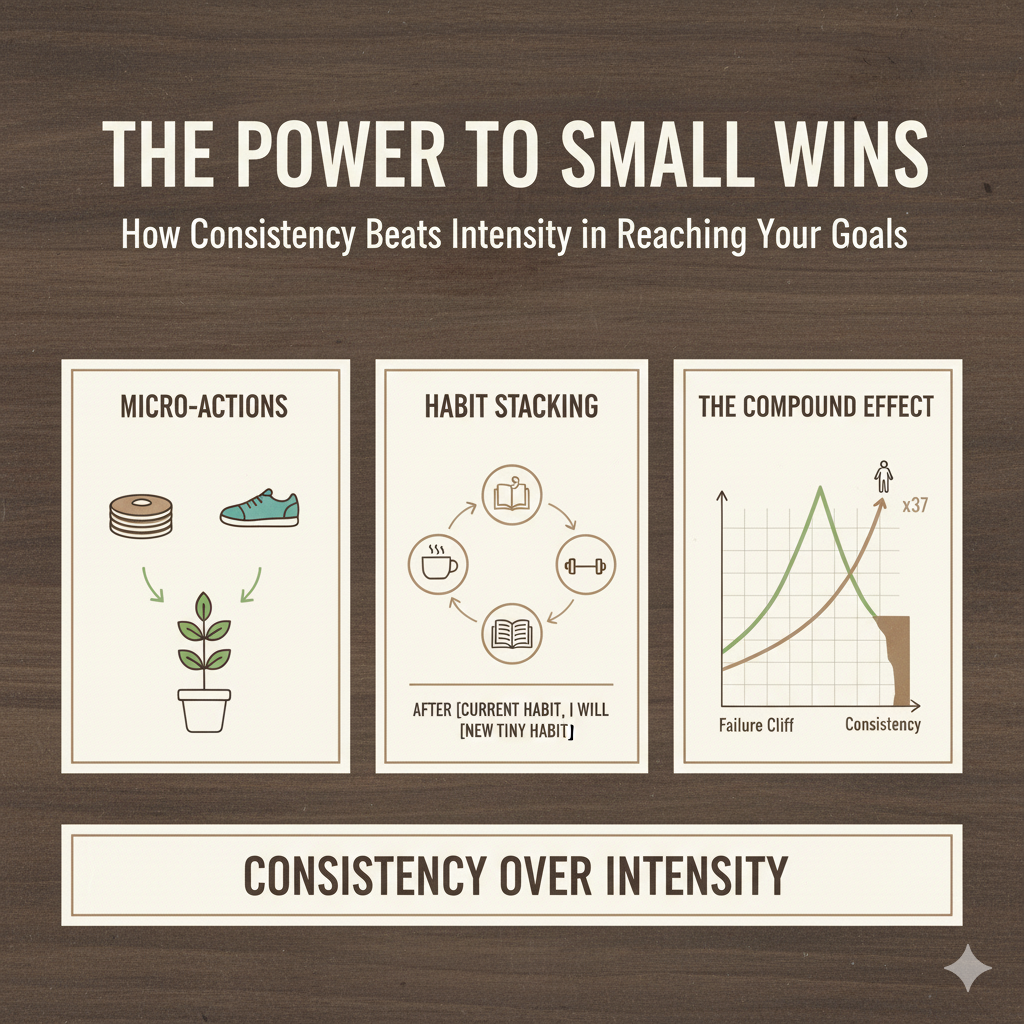
The idea of little victories is where consistency’s real power resides. Five minutes of reading, an additional glass of water, or a single block of time devoted to a passion project are examples of micro-actions. As individuals, they feel unimportant. Here’s the trick, though: they compound when done every day. Getting just 1% better each day makes you 37 times better by the end of the year, according to a famous calculation by habits expert James Clear. Even while taking the first few steps may seem like a long process, each little move strengthens your reputation as a follower. The objective is to create a system where progress is unavoidable because the acts are too small to fail, not to bring about instant change.
The all-or-nothing strategy has the flaw of being essentially unsustainable. We expose ourselves to the unavoidable “Failure Cliff” when we strive to be flawless all the time. If we miss one day, the entire system feels broken, and we give up on the aim entirely. Consistency produces rhythm, while intensity produces resistance. Sitting down for four hard hours every Saturday to write a book feels like a war. However, writing 250 words a day for business turns into a habit that you can stick with and even meditate on. The secret to sustaining long-term momentum without the painful self-criticism is to make the change from striving for perfection to loving the process.
Focus on creating a dependable system rather than merely establishing an ambitious objective if you want to maximize the power of consistency. Begin by determining the very minimal amount of work you are prepared to put forth—the activity so minor that it is impossible to avoid (e.g., “one push-up,” “write one sentence”). Habit stacking is the process of incorporating this new small habit into an already-existing routine (“After I finish my coffee, I will write one sentence”). You can gradually up the effort after the habit becomes automatic. You can create unstoppable momentum by putting the act of showing up ahead of the outcome of excellence. Showing up every day, even when you don’t feel like it, is the true triumph, and those little victories add up to something that will undoubtedly get you to the finish line.