
Mental Exercise: The Benefits of Fitness for Mental Health
Exercise has long been viewed as largely a physical activity that helps people keep in shape, gain muscle, or reduce weight. However, what if one of the most potent advantages of exercise has less to do with appearance and more to do with how you feel? Fitness and mental health have a clear and substantial relationship. One of the best ways to reduce stress, elevate your mood, and strengthen your mental fortitude is to move your body. This is a fundamental fact supported by science, not only a theory.
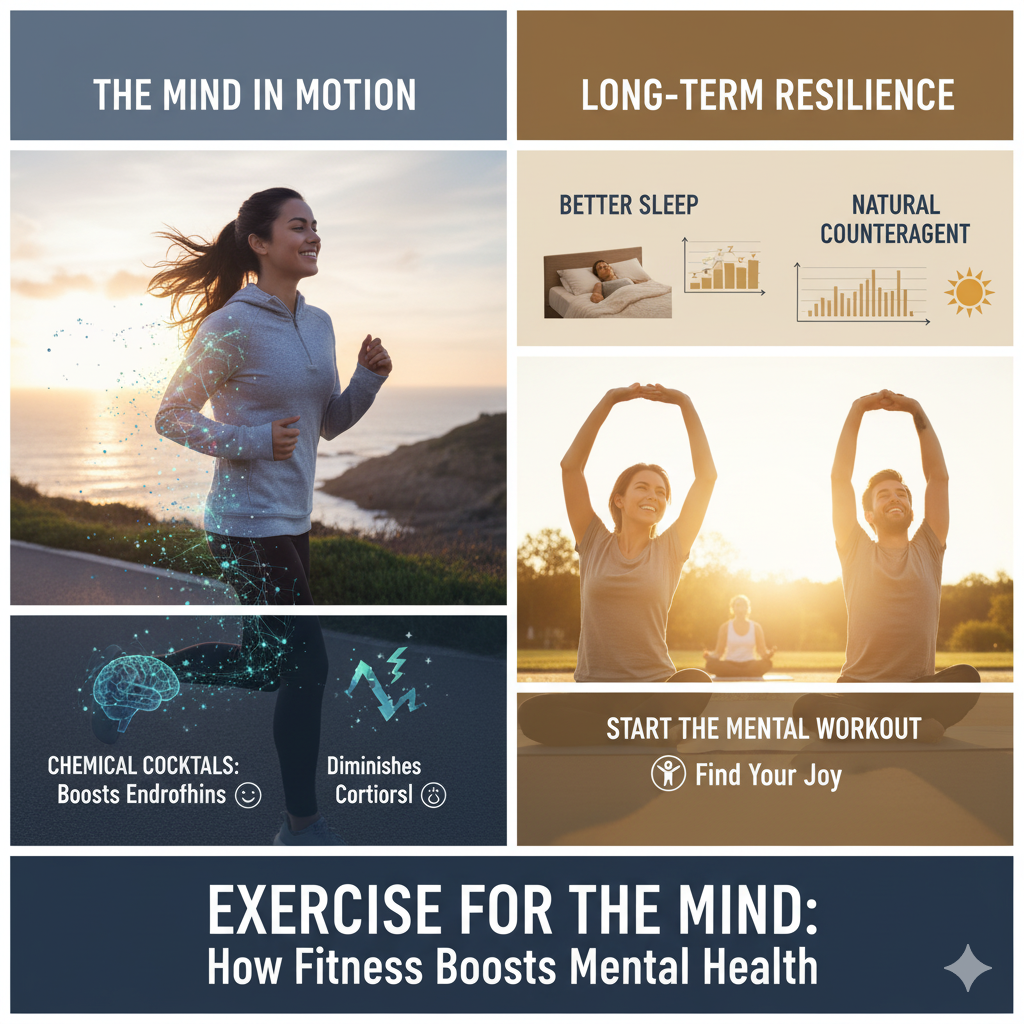
Movement’s Chemical Cocktails
So, how can sweating really benefit your brain? An assortment of chemicals holds the solution.
Your body releases endorphins, sometimes referred to as “feel-good” hormones, when you exercise. Naturally occurring pain relievers and mood enhancers are the cause of the well-known “runner’s high.”
Diminish the Stress Hormone: Cortisol, the body’s main stress hormone, is likewise lowered by regular exercise. Exercise may be thought of as a release valve since it provides your body with a healthy means of burning off the tension and anxiety that accumulate throughout the day. This explains why a vigorous workout or a quick walk may be so soothing following a demanding day. To achieve balance, your body and brain must cooperate.
Long-Term Advantages of Resilience
Exercise has long-term effects on your mental health and cognitive function in addition to the short-term mood boost.
Better Sleep: Physical activity enhances the quality of sleep, which is essential for cognitive and emotional control. You feel more rested and capable of overcoming obstacles after getting a good night’s sleep.
A Natural Counteragent: Exercise has been shown to be an effective treatment for anxiety and depression. Exercise on a regular basis can help manage mild to moderate depressive symptoms. It’s a type of treatment that fosters self-worth and offers a worthwhile sense of achievement.
Begin the Mental Exercise
Being an outstanding athlete is not necessary to benefit from this mind-body connection, which is its beauty. Exercise has very few initial advantages. Walking for even 20 minutes each day can have a significant impact. Finding an activity you truly enjoy is crucial, whether that be yoga, dance, hiking, or cycling. The purpose is to appreciate your body’s abilities rather than to punish it. This makes it simpler to maintain consistency and transform a new habit into a long-term way of living.
The importance of maintaining your mental well-being is ultimately equal to that of maintaining your physical well-being. You can do both at the same time by exercising. By making movement a regular part of your routine, you’re not just building a stronger body; you’re building a happier, healthier, and more resilient mind.