
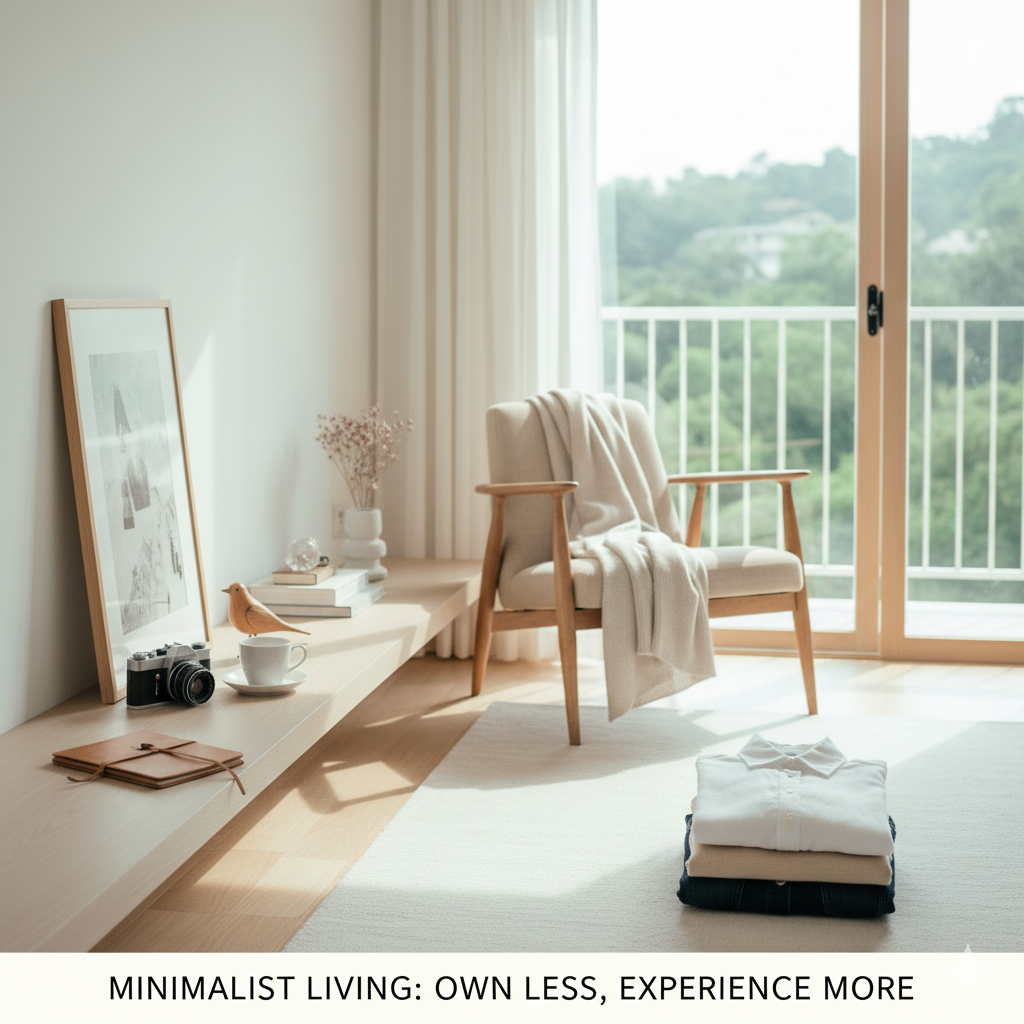
Examine the area where you live. Is it cluttered with things you hardly remember purchasing, or is it full with things you genuinely enjoy and use? The burden of our belongings—the cleaning, the storage, and the mental effort required to maintain them—has become too much for many of us to handle. This is where the minimalist lifestyle philosophy comes into play. It’s not about giving up everything you love or living in a blank white room. It involves consciously organizing your life such that your belongings complement your objectives rather than detract from them. Owning fewer possessions in order to afford to acquire more experience is a compelling trade-off.
The Editor’s Freedom
A single, profound inquiry is frequently the beginning of the minimalist journey: Does this item offer value to my life? If the response is negative, it’s probably taking away time, space, or tranquility. Editing is the first and most important phase, sometimes referred to as the “purge.”
Clear Your Space, Clear Your Mind: Our mental and physical surroundings reflect each other. A messy closet frequently results in a cluttered mind, which exacerbates anxiety and decision fatigue. You feel instantly lighter after methodically clearing out non-essential stuff from your home, such as forgotten trinkets, kitchen appliances you’ve never used once, and clothes you never wear.
Quality Over Quantity: While minimalists oppose wasting money, they do not oppose spending it. Instead of continuously replacing inexpensive, disposable products, they would rather spend in a small number of well-made, long-lasting items that they truly enjoy and will last for years. An ideal example would be a capsule wardrobe, which consists of a few timeless, adaptable items that minimize morning decision-making.
Creating Space for Experience
The real appeal of having less possessions lies not in the neat shelves or empty drawers, but rather in what the space allows. You can free up important resources by reducing the expense, effort, and care required to maintain a sizable collection of belongings.
Financial Freedom: Saving money comes naturally when you stop purchasing unnecessary items. This extra money can then be used for things like education, travel, learning a new skill, or just spending more time with loved ones—activities that foster personal development and long-lasting memories. The accumulation of memories takes precedence over the accumulation of debt.
Time and Energy: Consider the amount of time you invest in organizing, cleaning, shopping, and fixing your possessions. You may significantly cut down on the amount of time you spend managing your possessions by reducing their sheer quantity. Your newfound riches is the time you’ve regained, which you can use for relationships, hobbies, or health.
Fundamentally, minimalism is a means of discovering meaning. It compels you to identify what makes you happy and toss out the rest. It’s a consistent practice to put life before logistics and to choose the enduring value of experience over the transient excitement of acquisition. Are you prepared to exchange the burden of material belongings for the simplicity of living in the moment?